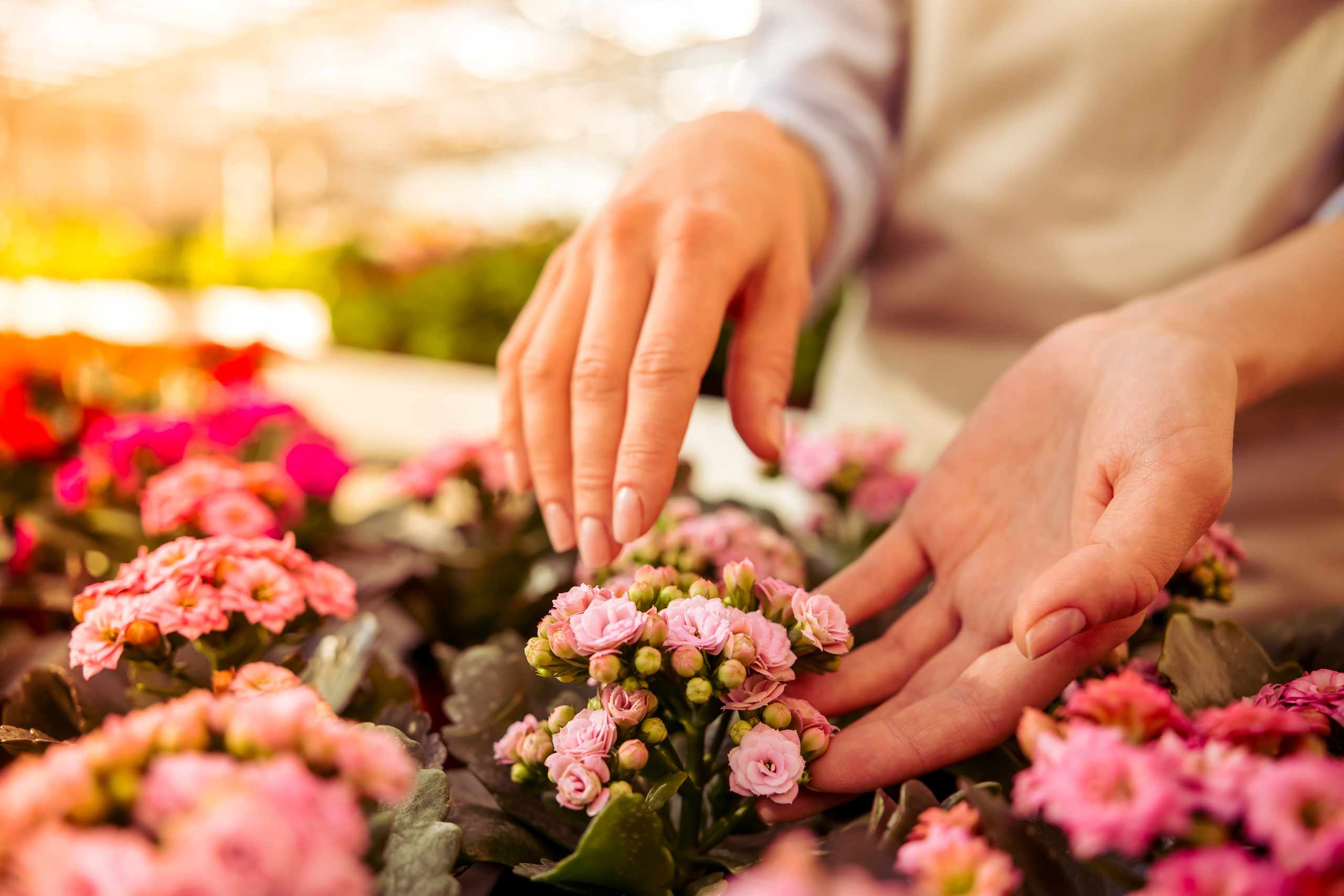
Even though the surface of a potted flower may look dry, there could be a lot of moisture left in the potting mix around the roots. That leads to a lot of overwatering. Instead of assuming that the dry-looking or dusty surface of a flower pot requires watering, look beneath the surface. You can check by putting your finger or a small wooden dowel into the soil and seeing if it feels cool and moist. If not, it’s likely that you should wait to water.
Even if you do see a dry surface, there are several other factors that determine whether or not the plant needs water. A smaller pot with less potting mix will dry out faster than a larger container, and a pot with good drainage allows excess water to escape, whereas pots with poor drainage can retain too much moisture around the roots. That’s why it doesn’t work to simply water every flower on a weekly basis, because each pot has different needs based on its contents.
You can also tell when a plant needs water by looking at the condition of its foliage. Leaves losing firmness or starting to droop can mean a plant is short on water, but those same symptoms can also pop up when roots have been sitting in waterlogged soil. Be sure to check the soil first, if the potting mix is still moist, it’s probably not a good idea to add more water. Other signs of a plant that’s struggling include yellowing leaves, slow or stunted growth, and a heavy container that seems to stay wet for a long time.
There are a few things that you can do to help yourself get a better handle on your watering schedule. One is to lift the pot carefully when the mix is pretty dry to notice its weight, and then lift it again after watering and letting it drain. It’s surprising how much heavier a freshly watered container can be. You can also look at the condition of the plant and the soil to get a sense of how much water the pot is taking in and how quickly it’s drying out. Keep some simple notes so that you can review how quickly plants respond to watering over time, and pay attention to any changes in their growth or health. By keeping track of these details, you can make adjustments to your watering habits to help your plants thrive.
Finally, how you apply water to your plants is important. When you give a quick sip of water to a plant each day, you may be providing just enough moisture to keep the surface of the soil moist, but the roots deeper in the pot might not be getting enough water. To help your plants get what they need, water them deeply only when they need it. Start with a small amount and allow it to soak into the soil before adding more. Stop when the water starts to run out of the bottom of the pot, and let the excess drain away. Don’t leave the pot sitting in a puddle of water unless the plant requires it, and always ensure that there are good drainage holes in the bottom of your pots so that roots can breathe.
Once you know how much light and temperature affect your plants, you can begin to tailor your watering schedule to meet their individual needs. Flowers that grow in bright, sunny areas may require more frequent watering than those in shaded areas, and seedlings in small pots will need more regular watering than fully mature plants in larger containers. You don’t need to follow a set schedule for watering, just be aware of how quickly each pot dries out, and adjust accordingly. Take notes of when you watered each plant, the moisture level of the soil, and how the plant responded to watering. In time, you’ll develop a better understanding of each plant’s unique requirements.
Improving your watering habits won’t be a huge revelation, but it should help you avoid some common mistakes that lead to unhealthy plants. You won’t have to water as frequently, and your plants will have a less extreme fluctuation in moisture levels. In addition, you will be able to monitor when plants need water based on visual cues rather than just by habit. So, the next time you see a dry-looking pot of flowers, take a moment to consider what the roots need. Look at the soil, check the weight of the pot, and evaluate the condition of the plant.